
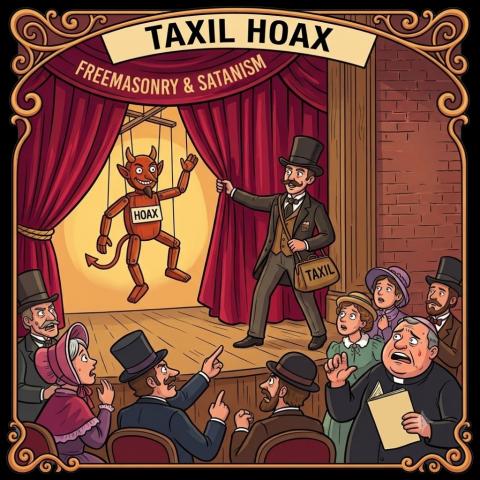
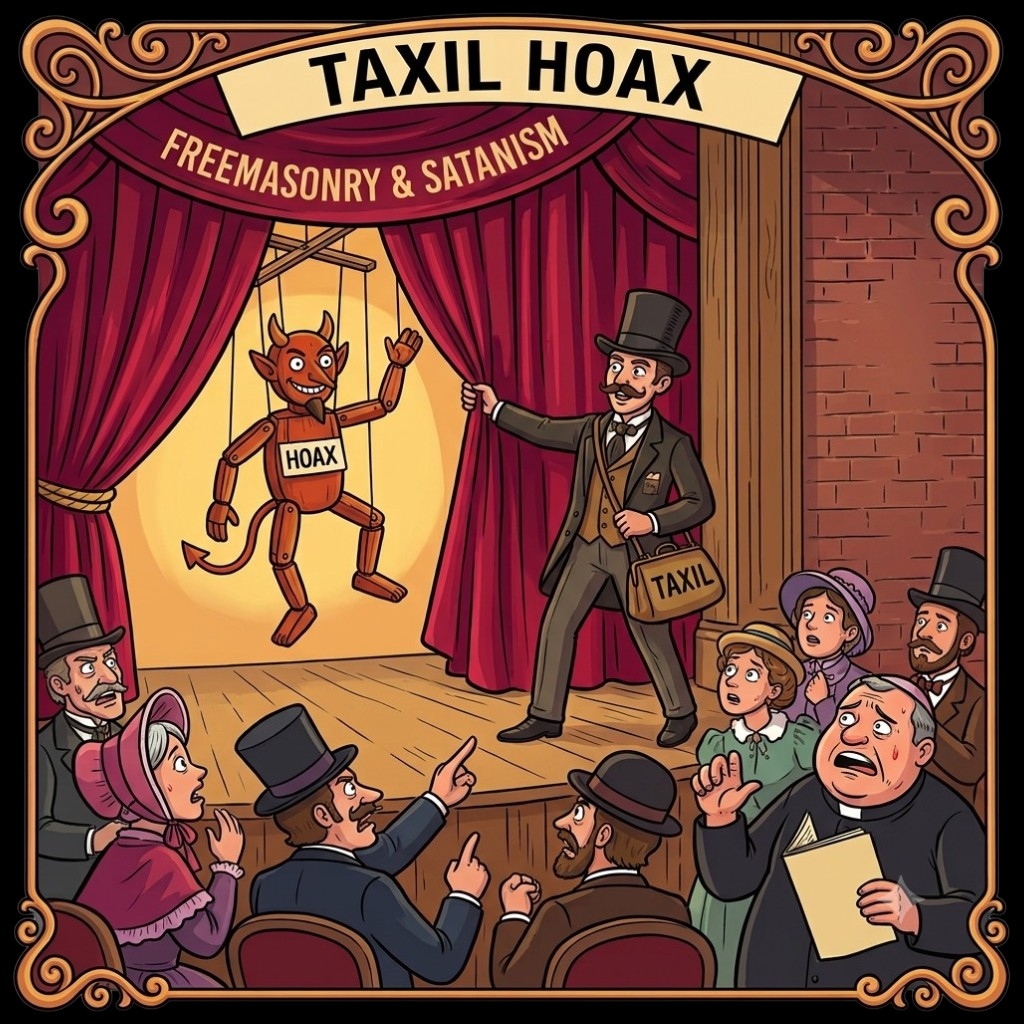
 In 1885, a French writer named Léo Taxil publicly "converted" to Catholicism and began publishing sensational claims about Freemasonry, alleging it was secretly run by satanic cults. Over the next twelve years he built an entire fictional universe around a supposed satanic priestess named Diana Vaughan, complete with elaborate backstory, staged public appearances, and serialized "revelations" released in careful installments. Catholic readers across Europe devoured it. The Vatican itself took interest. In 1897, Taxil called a press conference and admitted the whole thing had been invented from the start, a prank designed to embarrass the institutions who believed him.
It is tempting to file this away as a strange footnote in religious history. But strip away the demons and secret societies, and Taxil's twelve-year campaign is a surprisingly complete case study in audience-building, content strategy, and credibility engineering. Some of what he did maps directly onto tactics used by legitimate businesses today. Some of it maps onto tactics that get companies sued, boycotted, or laughed off the internet. The line between the two is worth examining closely.
The Tactics Still Work Today
Taxil succeeded because he intuitively understood mechanics marketers now study formally.
Serialized release: Rather than publishing one book and moving on, Taxil released his claims in ongoing installments over years. Each new pamphlet promised further revelations, keeping his audience returning. This is structurally identical to a modern email nurture sequence or a subscription content calendar, where the goal is never to give the audience everything at once.
Borrowed trust: By staging a public conversion to Catholicism before launching his campaign, Taxil gained access to Catholic publishers, clergy, and eventually Rome itself. He borrowed an institution's credibility rather than building his own from scratch, similar to how a brand today might seek a partnership, certification, or a respected spokesperson to transfer trust to a new offering.
Specificity as credibility: Diana Vaughan was not a vague rumor. Taxil gave her a detailed biography, supposed writings, and public appearances. Specific, concrete detail reads as more believable than a general claim, which is exactly why strong case studies, named customer stories, and precise data points outperform vague testimonials in real marketing.
Audience first framing: The Church had already condemned Freemasonry before Taxil arrived. He was not manufacturing suspicion out of nothing. He was supplying "proof" to an audience already primed to believe it. Effective marketing today works the same way: it identifies an audience's existing beliefs and desires and speaks directly to them, rather than trying to invent demand from a cold start.
None of these tactics are inherently dishonest. A software company running a weekly product update series, a nonprofit publishing named beneficiary stories, or a startup securing an endorsement from a respected figure in its industry are all using versions of the same playbook, honestly.
Where the Line Gets Crossed
The difference between Taxil and a legitimate marketer is not the tactic. It is whether the underlying claim is true, and whether the audience has a fair chance to evaluate it.
Modern examples of this same playbook used dishonestly are not hard to find.
Fyre Festival 2017): Organizers used influencer marketing and a carefully staged reveal, models and paid posts suggesting a luxury music festival on a private island, to sell tickets before any of the infrastructure existed. The gap between the promise and the reality became one of the most public marketing collapses in recent memory, resulting in lawsuits, a fraud conviction for the founder, and lasting reputational damage to everyone associated with the promotion.
Theranos: Elizabeth Holmes built credibility through carefully staged demonstrations, high-profile board appointments, and a drip-feed of press coverage that built anticipation for blood-testing technology which did not work as claimed. The borrowed trust of prestigious investors and board members functioned much like Taxil's borrowed trust from the Church, and the eventual collapse led to criminal fraud charges.
Volkswagen "Clean Diesel" campaign: Volkswagen spent years marketing certain diesel vehicles as environmentally friendly while secretly using software to cheat emissions tests. When the deception surfaced in 2015, the company faced billions in fines, lawsuits, and a brand reputation hit it is still working to recover from.
In each case, the underlying marketing mechanics, staged reveals, borrowed credibility, audience-targeted messaging, were sound. The fraud was in the substance behind them, not the delivery method.
Building an Ethical Version of the Taxil Playbook
A business wanting to use these same proven mechanics without the risk of a Taxil-style implosion can follow a few guardrails.
Serialize truth not suspense for its own sake. A drip-feed content calendar works well when each installment delivers genuine value, a real product update, a real customer result, a real piece of education. It becomes manipulative the moment the goal shifts to withholding information purely to generate anxiety or urgency.
Earn trust before borrowing it. Partnerships, certifications, and endorsements are powerful, but only when the underlying product can support the claim being made. A borrowed reputation without a real product behind it is a debt that eventually comes due.
Use specific, verifiable detail. Named case studies and real numbers build credibility precisely because they can be checked. The moment a business starts inventing specifics to sound more credible, it has crossed from persuasive marketing into fabrication.
Know your audience without exploiting their existing beliefs unfairly. Speaking to what an audience already cares about is good marketing. Manufacturing false "proof" to confirm what they already fear or want to believe is closer to what Taxil did, and it carries the same long-term risk of a public reckoning.
Plan for scrutiny, not for the reveal to be a punchline. Taxil's final "reveal" was designed to humiliate his audience. A responsible business should welcome its audience examining claims closely at any point in the campaign, not be building toward a moment when the truth becomes an embarrassment.
The Takeaway
Léo Taxil was not a marketer. He was a hoaxer who happened to stumble onto tactics that still drive attention more than a century later. His story is a useful reminder the tools themselves, serialization, borrowed credibility, audience-specific messaging, are neutral. What determines whether a business ends up looking like a savvy content strategist or a modern-day Fyre Festival is simple: does the substance behind the story hold up once the audience gets a closer look?